If you’re new to steel club training and don’t know where to start, this guide is for you.
Steel clubs can look pretty intimidating at first. There are hundreds of different exercises, different weights, different grips, and once you start watching club training online, it can get confusing pretty quickly.
The good news is you don’t need to learn hundreds of exercises to get started.
In this beginner’s guide, I’m going to break steel club training down from the very beginning.
You’ll learn what a steel club is, what makes it different from traditional weights, what weight you should start with, how to grip and control the club, and the fundamental movements I’d recommend learning first.
I’ll also show you how to progress your training, how many sets and reps to perform, the most common beginner mistakes to avoid, and how to put everything together into a simple beginner steel club workout.
So, if you’ve just bought your first steel club — or you’re thinking about getting one — by the end of this guide, you’ll know exactly where to start.
What Is a Steel Club?
Before getting into steel club training, it’s worth understanding that there are several different types of clubs.
Steel Clubs
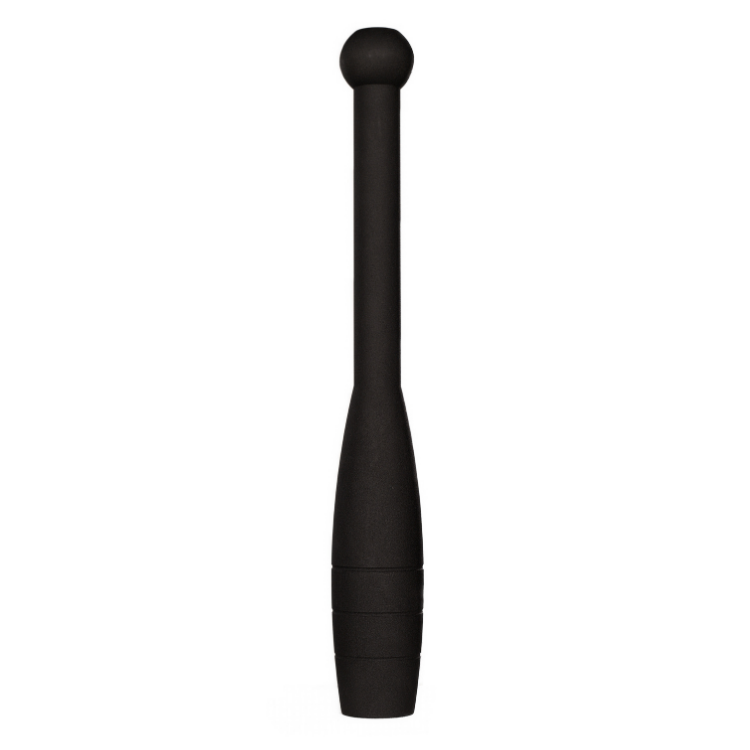
A steel club has a long, elongated barrel, with the weight distributed along the length of the club.
Steel clubs are designed primarily as a strength and conditioning tool and can range from relatively light beginner clubs through to extremely heavy clubs for advanced strength training.
Indian Clubs
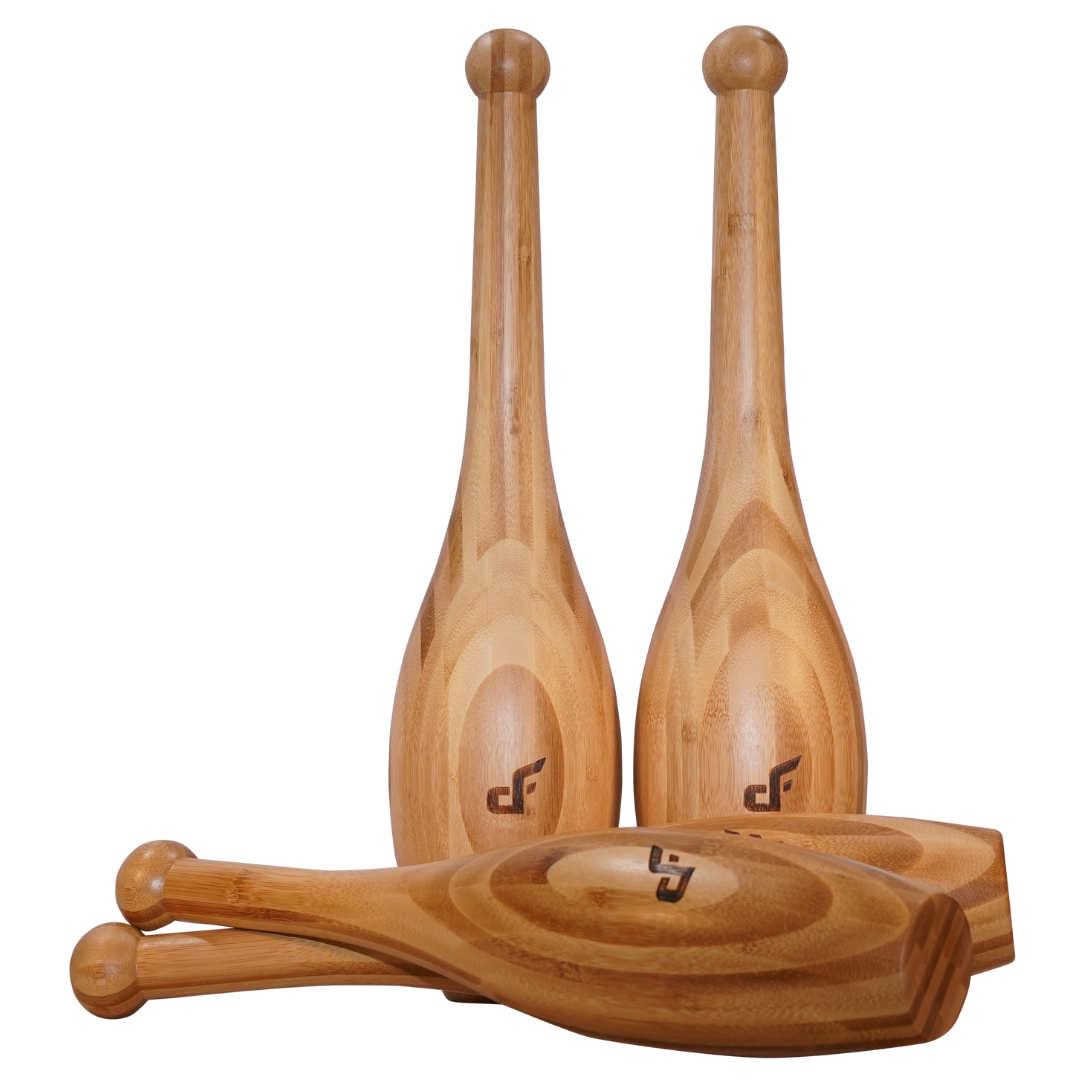
Indian clubs are traditionally made from wood, although modern versions can also be made from other materials.
They’re considerably lighter than steel clubs and are generally used for mobility, coordination and developing fluid movement through the shoulders. Traditional Indian clubs commonly weigh around 1–3lb.
Bulava Clubs
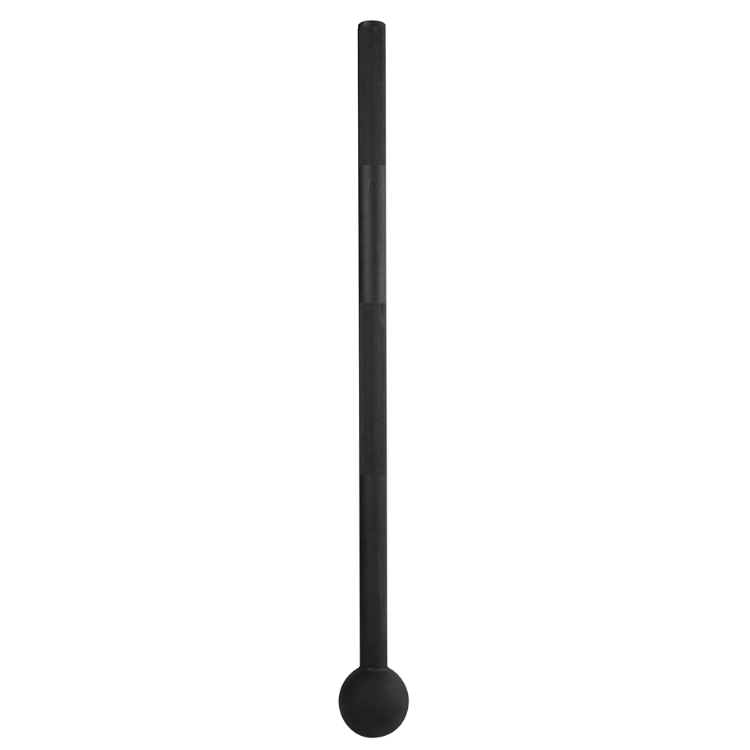
A Bulava club is essentially a short mace that’s used like a club.
Rather than having the weight distributed along an elongated barrel like a steel club, most of the weight is concentrated toward the end of the handle.
This changes the centre of mass and creates a very different swinging experience.
Persian Meels
Persian meels are another traditional type of club and are a different strength-training tool again.
They can range from relatively light meels through to extremely heavy versions traditionally used for strength and conditioning.
For the purpose of this guide, we’re going to focus specifically on the steel club.
Steel Club Anatomy
There are four main parts of a steel club.
Pommel
At the bottom of the club is a round section called the pommel.
The pommel assists your grip and helps prevent the club from slipping out of your hand. Generally, the heel of your hand will rest against the pommel.
Handle
Above the pommel is the handle, which is where you grip and control the club.
Barrel
Above the handle is the barrel.
This is where most of the weight of the steel club is distributed.
Muzzle
At the end of the club is what we call the muzzle, sometimes simply referred to as the base of the club.
The surface of the club can also affect grip. Our Dangerously Fit steel clubs, for example, are powder coated to assist with grip and control.
Why Does a Steel Club Feel So Heavy?
If you’ve never trained with a steel club before, one of the first things you’ll notice is that it feels completely different to a dumbbell or kettlebell.
A steel club is essentially an elongated, offset-loaded weight.
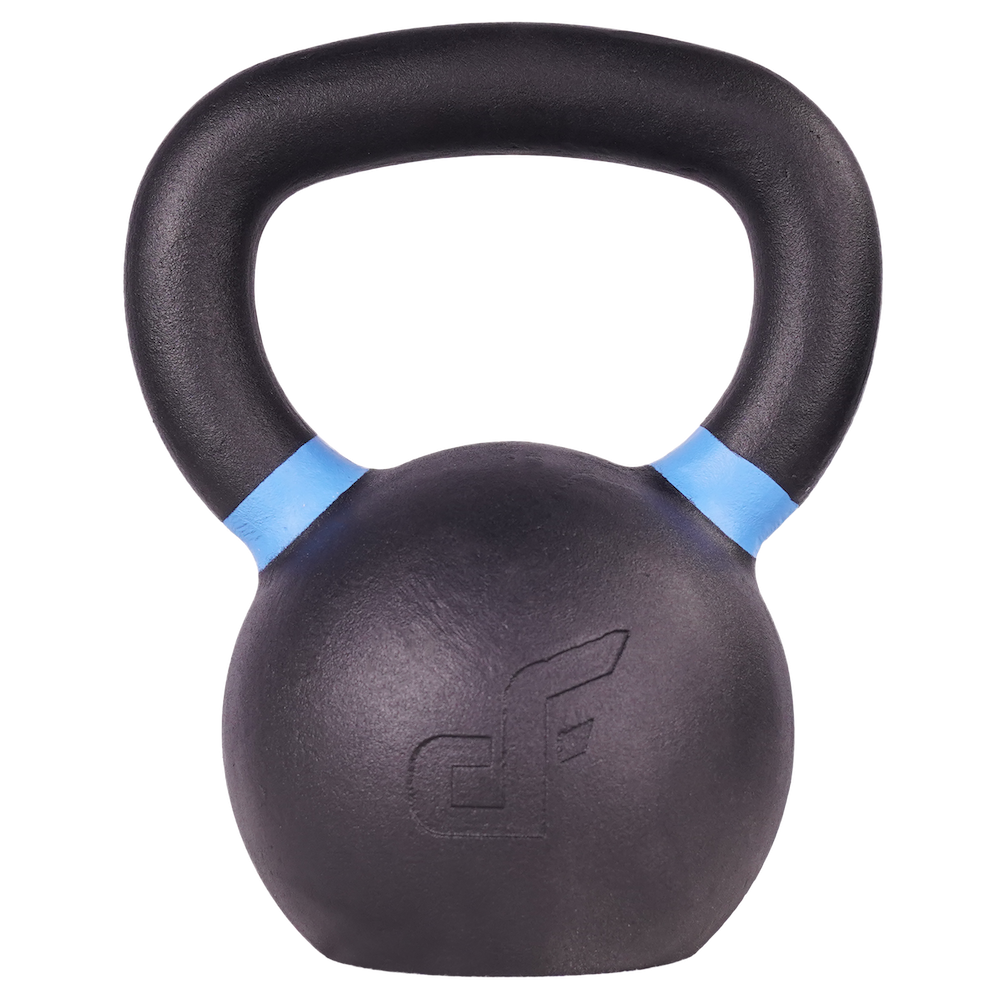
With a dumbbell, the weight sits relatively close to your hand. With a steel club, much of the weight sits farther away from your point of contact.
This moves the centre of mass away from your body and creates leverage.
The greater that leverage becomes, the harder your muscles have to work to control and stabilise the weight.
That’s why a 4kg steel club can feel considerably heavier than a 4kg dumbbell.
One of the great things about leverage training is that you can even change the difficulty without changing the weight.
Grip higher up the handle and you shorten the lever, making the club easier to control.
Move your hand farther down toward the pommel and you increase the leverage, making exactly the same club more challenging.
It’s this combination of offset loading and leverage that makes steel club training so unique.
What Are the Benefits of Steel Club Training?
There are many reasons to incorporate steel clubs into your strength and conditioning program.
1. Grip and Forearm Strength
Steel clubs are fantastic for developing grip strength and muscular endurance in the forearms.
Because the weight sits away from your hand, virtually every steel club exercise becomes a grip exercise.
When swinging a club, your forearms have to work continuously to control and stabilise the weight as the club moves through different positions.
2. Core Strength
Steel clubs allow you to train your core while standing upright and producing force through the entire body.
A strong core helps transfer force from the lower body through the upper body, which is particularly important for athletes and movements involving swinging, throwing and rotation.
3. A Different Loading Stimulus
Traditional strength exercises such as bench presses, squats and deadlifts place the body under significant compressive loading.
Swinging a steel club creates a very different loading stimulus as the club travels away from the body and generates traction through the movement.
This makes club training a useful complement to more traditional strength-training exercises.
4. Shoulder Strength, Stability and Mobility
Steel clubs are excellent for developing circular shoulder strength.
Rather than simply pressing or pulling a weight through a relatively straight path, club exercises require you to accelerate and decelerate resistance through large circular movement patterns.
This combination of strength, stability and mobility can help develop more resilient shoulders.
Strength + Stability + Mobility = Durability.
5. Multi-Planar Movement
One of the biggest differences between club training and many conventional strength-training programs is the ability to move resistance through multiple planes.
Steel clubs can be trained through:
- Sagittal plane: forwards and backwards
- Frontal plane: side to side
- Transverse plane: rotational movement
This makes them particularly useful for building strength through a wider variety of movement patterns.
6. Rotational Strength
Steel clubs are perfectly suited to swinging, twisting and rotational movements.
These movements can help develop rotational force or torque, which is important in many athletic activities.
7. Athletic Performance
Sports involving throwing, swinging a bat or racket, striking, swimming and other rotational movements require the body to generate and control force through large ranges of motion.
Club training can be a useful way of developing these qualities in the gym.
8. Full-Body Flow Training
Another thing that makes steel clubs unique is the ability to chain multiple exercises together into a continuous flow.
A flow generally combines three or more exercises into one seamless sequence, with each movement beginning where the previous movement finishes.
This allows you to combine strength, conditioning, coordination and movement into the same workout.
What Weight Steel Club Should a Beginner Start With?
If you’re completely new to steel club training, my advice is always to start lighter than you think you need to.
Remember, because of the length of the club and the leverage it creates, a 4kg steel club is going to feel considerably heavier than a 4kg dumbbell.
But there’s another important reason I recommend starting light.
Strength training is a skill, and leverage training requires even greater skill.
Even if you have years of traditional weight-training experience, be prepared to be humbled by the relatively low weights used with clubs and maces.
Raw strength isn’t much good with club training if you can’t relax.
Large ballistic swinging movements require you to transition between tension and relaxation. You need to learn when to be tight, when to be loose and when to become tight again.
When learning movements such as casts, swipes and mills, you need to be able to relax and allow the club to move freely, particularly during the backswing.
If the club is too heavy, you’ll struggle to relax during the appropriate part of the movement. This can restrict your range of motion and negatively affect your technique.
So don’t worry about how heavy you can go when you’re starting out.
Choose a weight you can control, learn the movements properly and build from there.
My Recommended Beginner Steel Club Weights
- Beginner women: 5lb / 2kg
- Beginner men: 10lb / 4kg
And you don’t need to buy two clubs when you’re first getting started.
Start with one steel club. You can add a second club later once you’re proficient with the fundamental movements and can confidently control one club.
How to Grip a Steel Club
Club training requires a different style of grip to many traditional strength-training exercises.
Rather than squeezing the handle as hard as possible throughout every repetition, I teach something called intelligent gripping.
Intelligent gripping means applying more tension during the parts of the movement where you need to accelerate, decelerate or control the club, while relaxing your grip when the club is moving more freely.
Think:
Loose → Tight → Loose → Tight
This is important because club training places a huge demand on the wrist and forearm muscles. If you use a maximum crush grip throughout the entire movement, your grip can fatigue unnecessarily quickly.
There are three grips I’d recommend understanding as a beginner.
Hammer Grip
Position your little finger against the pommel of the club.
Maintain a firm but relaxed grip and keep your wrist in a neutral position.
You want enough tension to control the club without unnecessarily squeezing the handle.
Sabre Grip
Wrap your fingers around the handle close to the pommel and allow the pommel to sit against the heel of your hand and little finger.
The Sabre Grip is particularly useful when casting the club away from the body during swinging and circular movements.
Full Choke
If you’re a beginner struggling with the leverage of the club, you can use what we call a Full Choke.
Instead of gripping close to the pommel, move your hand farther up the handle toward the barrel.
This shortens the lever and makes the club considerably easier to control.
As your technique and strength improve, gradually move your hand farther down the handle to increase the leverage.
How to Progress With Steel Clubs
There are many ways to make an exercise more challenging, but with steel clubs there are two progression methods I recommend focusing on initially:
- Reducing your base of support
- Progressing the plane of movement
Progression 1: Reduce Your Base of Support
Start with one club controlled with two hands.
Once you’re proficient with the movement, progress to one club controlled with one hand.
Once you can confidently perform the exercise single-handed, progress to two clubs — one in each hand.
Your progression therefore looks like:
One club + two hands → One club + one hand → Two clubs + two hands
Each step increases the control, stability and coordination required.
Progression 2: Change the Plane of Movement
The second way to progress is by changing the plane in which you’re moving.
Sagittal Plane
Start with linear movements travelling forwards and backwards.
Frontal Plane
Progress to movements travelling from side to side.
Transverse Plane
Finally, introduce rotational movements around the body.
The important thing is to progress one variable at a time.
Start with one club, two hands, in the sagittal plane.
Once you’ve mastered that level, progress either your base of support or your plane of movement — not both at the same time.
5 Fundamental Steel Club Exercises for Beginners
If you’re new to steel clubs, there are five fundamental exercises I’d recommend learning first.
Each teaches a different skill and together they create a strong foundation for more advanced steel club training.
1. Two-Handed Clean
The Two-Handed Clean teaches you how to generate power from the hips, accelerate the club from the floor and then control and decelerate it safely into the Order Position.
The Order Position is the starting position for many steel club exercises.
2. Two-Handed 180
The Two-Handed 180 introduces lateral movement and begins teaching the lower half of one of the most important movement patterns in steel club training.
It’s an important building block toward learning the Mill.
3. Arm Cast
The Arm Cast teaches you how to move the club from the front of your body to behind you while engaging the lats and leading with the elbows rather than the wrists.
4. Gamma Cast
The Gamma Cast builds on the Arm Cast by introducing rotation.
This helps develop the coordination and control needed for more advanced club movements.
5. Two-Handed Mill
The Mill combines many of the skills you’ve just developed:
- Hip drive
- Lateral movement
- Shoulder mobility
- Rotation
- Coordination
- Control
Master the first four movements and the Mill becomes considerably easier to learn.
Start with these five exercises and you’ll have a strong foundation for everything that comes next in your steel club training.
5 Common Beginner Steel Club Mistakes
Learning what not to do is just as important as learning the exercises themselves.
Here are five common mistakes I see beginners make.
Mistake 1: Starting Too Heavy
Beginners often choose a club that’s too heavy.
Start with a weight that allows you to learn proper technique first. The heavier clubs can come later.
A good rule of thumb is:
If you can’t relax during the movement, the club is probably too heavy.
If you’re gripping the handle as hard as possible from start to finish, consider reducing the weight and focusing on technique.
Mistake 2: Leading With the Wrists Instead of the Elbows
When moving the club from the front of your body to behind you — or bringing it back toward the front — learn to lead with your elbows and engage your lats.
Using the larger muscles of your back makes the movement smoother and gives you considerably more control than relying primarily on the smaller muscles around your wrists.
Mistake 3: Staying Tense Throughout the Entire Movement
Steel club training isn’t about squeezing the handle as hard as possible non-stop.
It’s about knowing when to relax and when to generate force.
Think:
Loose → Tight → Loose → Tight
Staying tense throughout the entire movement can restrict your movement, fatigue your grip and make the club feel heavier than it needs to.
Mistake 4: Skipping Rest Days
Like all strength training, your body needs time to recover.
I generally recommend training with at least one rest day between steel club strength sessions.
This gives your muscles, tendons and joints time to recover while you continue developing your technique.
I’ve personally trained with heavy clubs for more than a decade, generally three times per week. For me, recovery is just as important as the workout itself.
Mistake 5: Trying to Learn Everything at Once
One of the biggest mistakes beginners make is trying to learn every steel club exercise they see.
Don’t.
Focus on mastering a small number of fundamental movements first.
Once those movements become natural, learning more advanced exercises, combinations and flows becomes considerably easier.
How Many Sets and Reps Should You Do With Steel Clubs?
The number of sets and reps you perform will ultimately depend on your training goals.
As a general guide:
Lower reps + heavier weight: maximal strength
Moderate reps: general strength and conditioning
Higher reps + lighter weight: muscular endurance and flow training
If you’re a beginner and aren’t sure where to start, I recommend:
3 sets of 8–12 reps per exercise
Once you can comfortably perform more than 12 repetitions with good technique, increase the weight.
Ideally, the new weight should bring you back toward approximately eight repetitions.
Then gradually build your strength and skill until you’re performing 12 quality repetitions again before progressing the weight.
How Often Should Beginners Train With Steel Clubs?
For beginners, I generally recommend around:
3 steel club workouts per week
Have at least one rest day between strength-training sessions.
This gives your muscles, tendons and joints time to recover while still allowing you to practise frequently enough to develop your technique.
As you become more experienced, you can begin varying your training.
You might perform heavier, lower-repetition sessions for maximal strength, moderate-weight sessions for general strength and conditioning, and lighter, higher-repetition sessions for muscular endurance and flows.
Beginner Steel Club Workout
Once you’ve mastered the fundamental exercises, you can start linking movements together into combination lifts.
A combination lift simply links two exercises together into one smooth movement.
Here’s a simple beginner steel club workout to get started.
Exercises
- Two-Handed Swing Squat
- Two-Handed Arm Cast to Flag Press
- Two-Handed Clean to Torch Press
- Two-Handed Barbarian Squat
Workout Instructions
Perform 5 reps of each exercise.
Once you’ve completed all four exercises, rest for 60 seconds.
Complete 5 rounds in total.
Focus on smooth, controlled transitions rather than trying to perform the workout as quickly as possible.
Where to Go From Here
If you’ve worked through this beginner guide, you’ve now built a solid foundation.
You know how to choose an appropriate starting weight, how to grip and control a steel club, how leverage affects difficulty, which fundamental exercises to learn first, how to avoid some of the most common beginner mistakes, and how to structure your first workout.
Now it’s a matter of consistent practice.
Don’t rush to learn every exercise at once.
Master the basics first, then gradually increase the challenge by learning new movements, linking exercises together into combinations and flows, improving your technique and progressively increasing the weight as you become stronger.
Remember:
Steel club training is a skill.
The more quality repetitions you perform, the smoother and more natural the movements become.
Stay patient, stay consistent and trust the process.
Continue Your Steel Club & Mace Training
If you’d like to learn the fundamental movements step-by-step, check out my 7-Day Club & Mace Masterclass.
And if you’d prefer your programming done for you, the Dangerously Fit Inner Circle provides done-for-you steel club and steel mace workouts every week for an entire year.